
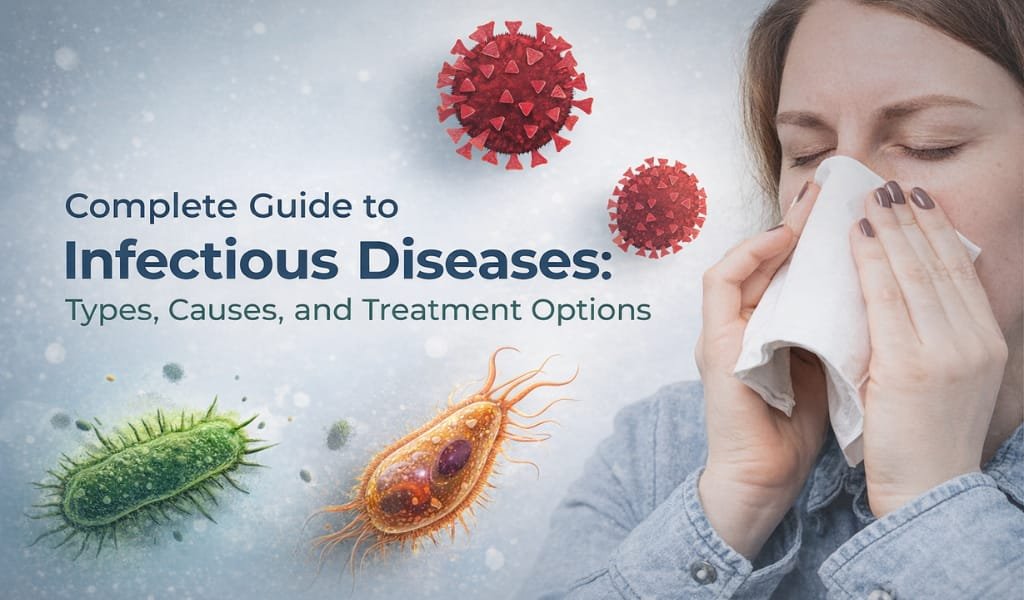
Infectious diseases are among the most common health problems worldwide. They affect people of all ages and can range from mild illnesses, like the common cold, to serious and life-threatening conditions. Understanding infectious diseases, their types, symptoms, and treatments helps people take better care of their health and seek medical help at the right time.
This complete guide explains infectious diseases in a clear and easy way, so everyone can understand how they spread, how they are treated, and how they can be prevented.
What Are Infectious Diseases?
Infectious diseases are illnesses caused by harmful microorganisms such as bacteria, viruses, parasites, or fungi. These organisms enter the body, multiply, and interfere with normal body functions.
Unlike non-infectious diseases (such as diabetes or heart disease), infectious diseases can spread from one person to another, either directly or indirectly.
Common Causes of Infectious Diseases
Infectious diseases are caused by different types of pathogens, including:
1. Bacteria
Bacteria are single-cell microorganisms. Some bacteria are helpful, but others can cause infections like pneumonia, tuberculosis, and urinary tract infections.
2. Viruses
Viruses need a host to survive. Common viral infections include influenza, COVID-19, hepatitis, and measles.
3. Parasites
Parasites live on or inside the body and cause diseases such as malaria and intestinal worm infections.
4. Fungi
Fungal infections often affect the skin, nails, or lungs. Examples include ringworm and yeast infections.
Types of Infectious Diseases
Respiratory Infections
These affect the lungs and breathing passages. Examples include:
● Common cold
● Influenza
● Pneumonia
● Tuberculosis
Gastrointestinal Infections
These impact the stomach and intestines, causing symptoms like diarrhea and vomiting.
● Food poisoning
● Cholera
● Rotavirus infection
Sexually Transmitted Infections (STIs)
These spread through sexual contact.
● Chlamydia
● Gonorrhea
● Syphilis
Skin and Soft Tissue Infections
These affect the skin and underlying tissues.
● Cellulitis
● Impetigo
● Fungal skin infections
How Infectious Diseases Spread
Infectious diseases can spread through several routes:
● Direct contact (touching, kissing)
● Airborne droplets (coughing or sneezing)
● Contaminated food or water
● Insect bites (mosquitoes, ticks)
● Blood or body fluids
Good hygiene and preventive measures can significantly reduce the risk of infection.
Symptoms of Infectious Diseases
Symptoms vary depending on the type of infection, but common signs include:
● Fever and chills
● Fatigue and weakness
● Cough or sore throat
● Diarrhea or vomiting
● Muscle aches
● Skin rashes
If symptoms persist or worsen, medical attention is necessary.
Diagnosis of Infectious Diseases
Doctors diagnose infectious diseases using:
● Medical history and physical examination
● Blood tests
● Urine or stool tests
● Imaging tests (X-ray, CT scan)
● Culture tests to identify the exact pathogen
Early diagnosis helps in faster recovery and prevents complications.
Treatment Options for Infectious Diseases
Treatment depends on the cause of the infection.
Antibiotics for Bacterial Infections
Antibiotics are used only for bacterial infections. One commonly prescribed antibiotic is azithromycin pills, which are often used to treat respiratory infections, skin infections, and some sexually transmitted infections.
Azithromycin works by stopping bacterial growth, helping the immune system eliminate the infection more effectively. It is usually taken for a short duration, but the full course must be completed to prevent resistance.
Antiviral Medications
Antivirals help manage viral infections such as influenza and herpes. They do not kill viruses but reduce their ability to multiply.
Antiparasitic Medicines
Parasitic infections are treated with medicines specifically designed to kill parasites. Iverheal 12 is an antiparasitic medication commonly used to treat certain parasitic infections by paralyzing and killing parasites in the body.
Antifungal Treatments
Fungal infections are treated using antifungal creams, tablets, or injections, depending on the severity.
Importance of Completing Treatment
One of the biggest mistakes people make is stopping treatment too early. Even if symptoms improve, stopping medication before completing the prescribed course can:
● Cause the infection to return
● Increase drug resistance
● Make future infections harder to treat
Always follow your doctor’s advice.
Prevention of Infectious Diseases
Prevention is better than cure. Simple habits can protect you and others.
Personal Hygiene
● Wash hands regularly
● Cover mouth while coughing or sneezing
● Keep wounds clean
Safe Food and Water
● Eat properly cooked food
● Drink clean, safe water
Vaccination
Vaccines protect against many serious infections such as measles, hepatitis, and influenza.
Safe Sexual Practices
Using protection and regular health checkups help prevent STIs.
Seek medical help if you experience:
● High or persistent fever
● Difficulty breathing
● Severe pain
● Symptoms lasting more than a few days
● Signs of dehydration
Early treatment prevents complications and speeds recovery.
Final Thoughts
Infectious diseases are common but manageable with the right knowledge, timely diagnosis, and proper treatment. Understanding how infections spread and how they are treated empowers people to make better health decisions.
Medicines like azithromycin pills and Iverheal 12 play an important role in treating specific infections when used correctly under medical guidance. Along with medication, prevention, hygiene, and awareness remain the strongest defenses against infectious diseases.
By staying informed and proactive, we can protect ourselves, our families, and our communities from infectious illnesses.
