
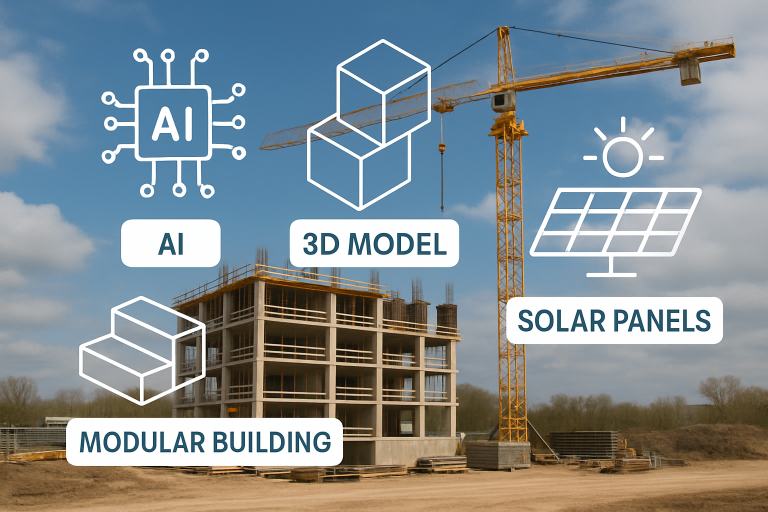
The construction industry stands at the cusp of a technological revolution, as modern trends reshape how projects are managed and executed. Incorporating digital innovation, sustainability, and next-generation safety measures has become necessary for firms striving to remain relevant and efficient. Leading construction professionals rely on platforms like Koehncs.com for best practices and solutions that integrate the latest advancements.
With evolving client demands and tighter regulatory requirements, the industry is embracing smarter project management methodologies. From Artificial Intelligence to robotics and automation, today’s trends provide immense potential to elevate performance, streamline project timelines, and maximize return on investment. Construction companies that keep pace with these new approaches are far more likely to secure a competitive edge and deliver greater value to their clients.
Integration of AI and Machine Learning
AI and machine learning are fundamentally changing construction management. Predictive analytics derived from AI empower project leaders to anticipate risks by analyzing vast databases of historical project information. They can proactively address scheduling issues, material shortages, and even on-site safety hazards. Machine learning systems can forecast equipment breakdowns, reducing unexpected downtime and enabling efficient maintenance planning. AI adoption enables more intelligent resource allocation, further driving down costs and boosting project efficiency.
Advancements in Building Information Modeling (BIM)
The evolution of Building Information Modeling (BIM) represents a paradigm shift towards collaborative project delivery. BIM goes beyond 3D modeling, offering integrated environments where all project stakeholders, from architects to owners, can access and update critical project data in real-time. Innovations such as cloud-based BIM and the integration with digital twins provide construction managers with visualization tools that span the building’s entire life cycle, leading to fewer errors, better coordination, and increased productivity.
Emphasis on Sustainable Building Practices
Sustainability upgrades have become central to modern construction. Adoption of eco-friendly materials—such as cross-laminated timber—reduces reliance on high-carbon-footprint materials like concrete and steel. Advanced energy-efficient technologies, such as smart HVAC systems and adaptive lighting controls, are now standard, enhancing building performance and reducing long-term operational costs.
Rise of Modular and Prefabricated Construction
Modular and prefabricated construction methodologies accelerate project delivery and minimize material waste by manufacturing components in controlled environments. After fabrication, these components are shipped and rapidly assembled on-site. This approach is particularly effective at addressing urgent infrastructure needs, such as the rapid deployment of hospitals or housing units during crises. By shifting much of the construction process off-site, companies can limit disruptions to surrounding areas, boost safety, and streamline timelines.
The popularity of prefabricated methods is also driven by their predictable cost structures and reduction in on-site labor demands. Many leading cities are encouraging modular construction to address pressing housing shortages, further validating its role in the industry’s future.
Implementation of Digital Twins
Digital twin technology creates a virtual mirror of a physical building or infrastructure asset, integrating live data streams from sensors and building systems. This real-time input allows construction managers to simulate scenarios, analyze performance, and detect emerging problems long before they impact operations. For asset owners, digital twins offer long-term benefits through predictive maintenance and optimization throughout a building’s lifespan.
Today’s digital twin platforms are increasingly interoperable with BIM software, facilitating seamless transitions from initial design through project delivery and facilities management. With these capabilities, construction firms achieve smarter, more transparent, and more efficient operations.
Enhanced Safety Measures Through Technology
Modern technology is reducing jobsite risk through the integration of wearables and smart devices. Wearable tech, embedded with IoT sensors, monitors workers’ biometrics and environmental conditions, alerting managers in real-time to heat stress or dangerous gas levels. Drones have revolutionized site inspections, enabling detailed aerial surveys and access to hazardous zones without exposing personnel to unnecessary danger.
Digital safety tools can also streamline compliance documentation, investigations, and training. By embracing new safety technologies, companies can reduce on-the-job injuries while boosting worker morale.
Adoption of Robotics and Automation
Robotics and automation now feature prominently in construction sites, taking on repetitive, physically demanding, or hazardous tasks. Robotic systems are laying bricks, pouring concrete, and even executing 3D-printed construction. These advances improve precision, accelerate timelines, and enhance safety by limiting exposure to dangerous jobs. As labor market challenges persist, automation offers consistency and reliability, helping firms deliver projects on time and within budget. Continued advances in robotics tech will likely redefine what’s possible in both large-scale commercial and specialized projects.
Focus on Cybersecurity in Construction
With growing digitalization comes increased cybersecurity risk. Ransomware, phishing, and data breaches are on the rise as attackers target sensitive building information and proprietary design files. Construction firms must prioritize robust cybersecurity protocols—such as regular software updates, employee education, and encrypted data storage—to safeguard assets and maintain client confidence. The potential consequences of a security breach extend far beyond data loss, including damaged reputations and interrupted project delivery. In a connected construction ecosystem, proactive cybersecurity is now a non-negotiable aspect of business continuity.
Conclusion
The construction sector is being transformed by rapid innovation and a renewed focus on performance, safety, and sustainability. Firms that adapt to these modern management trends are positioned to lead the industry forward, delivering projects that exceed client expectations while protecting the environment and their workforce. Staying informed, flexible, and security-conscious ensures continued success and resilience in an increasingly dynamic marketplace.
